
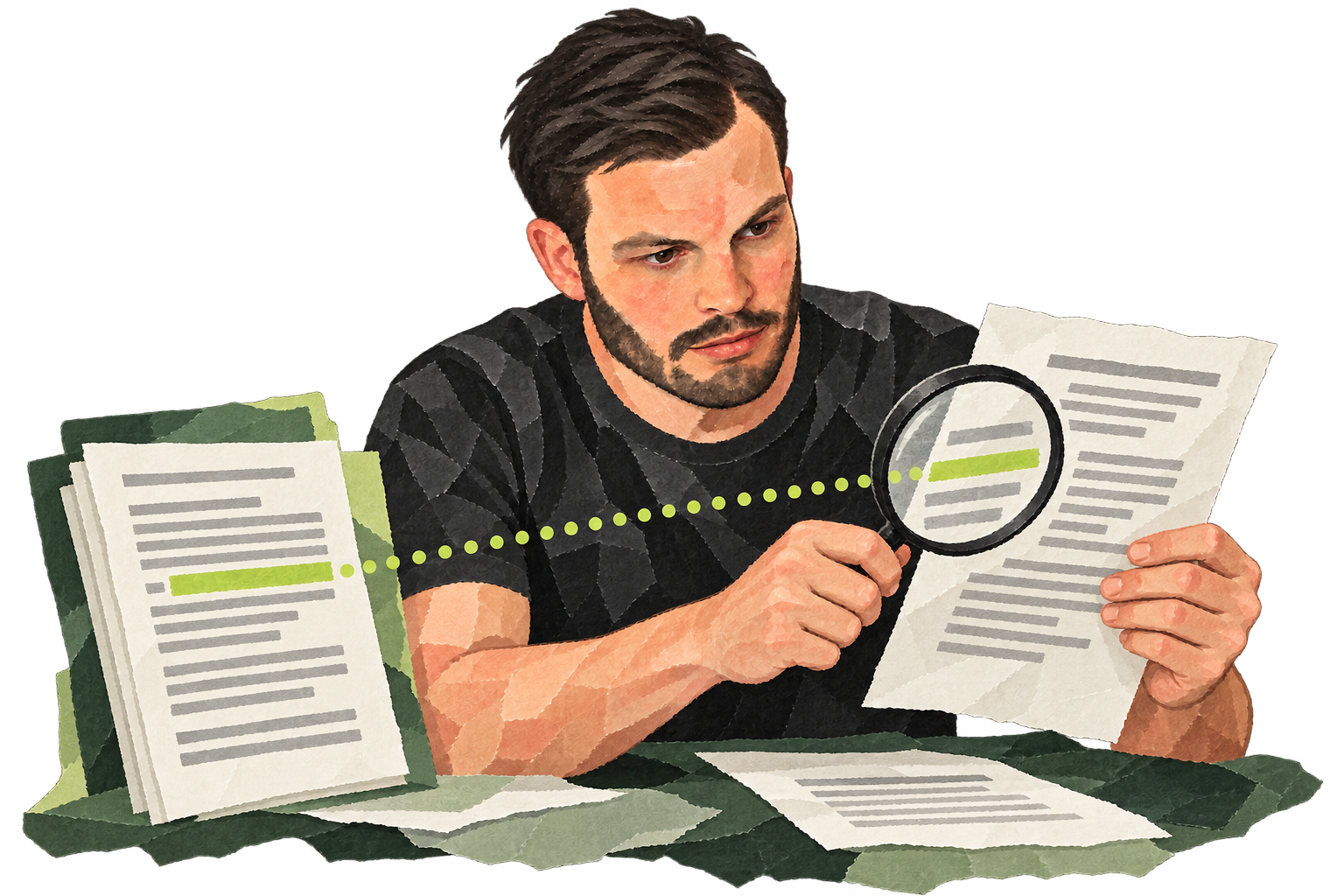
Writing website copy takes time. When I wrote about Copyscape in April 2011, I wanted to know what to do when the same sentences appeared elsewhere. Copyscape still offers a search that takes the URL of a published page and looks for matching text.
Examine the match first
A search result does not automatically prove that someone copied your work unlawfully. A quotation, product description or text you published in several places may appear as well. Open the result, compare the passages and record the URLs and date you saw them. Keep a copy of your original text and, if available, evidence of when you published it.
Then decide what you want to achieve. Should the text be removed, could you grant permission, or would attribution be enough? My old article suggested asking for a source link because of possible SEO value. That is not a universal answer: a link does not automatically make copying acceptable, and it cannot guarantee a search benefit. The context and your interests determine your response.
Make contact calmly
If the match is clear, write to the site owner politely and specifically. Identify the pages, matching passages and action you request. Allow room for an explanation or correction. For a larger dispute or uncertain ownership, seek qualified legal advice; the outcome depends on the facts and applicable rules.
Copyscape can reveal a possible problem. A person still needs to assess the source, permission and sensible next step.