
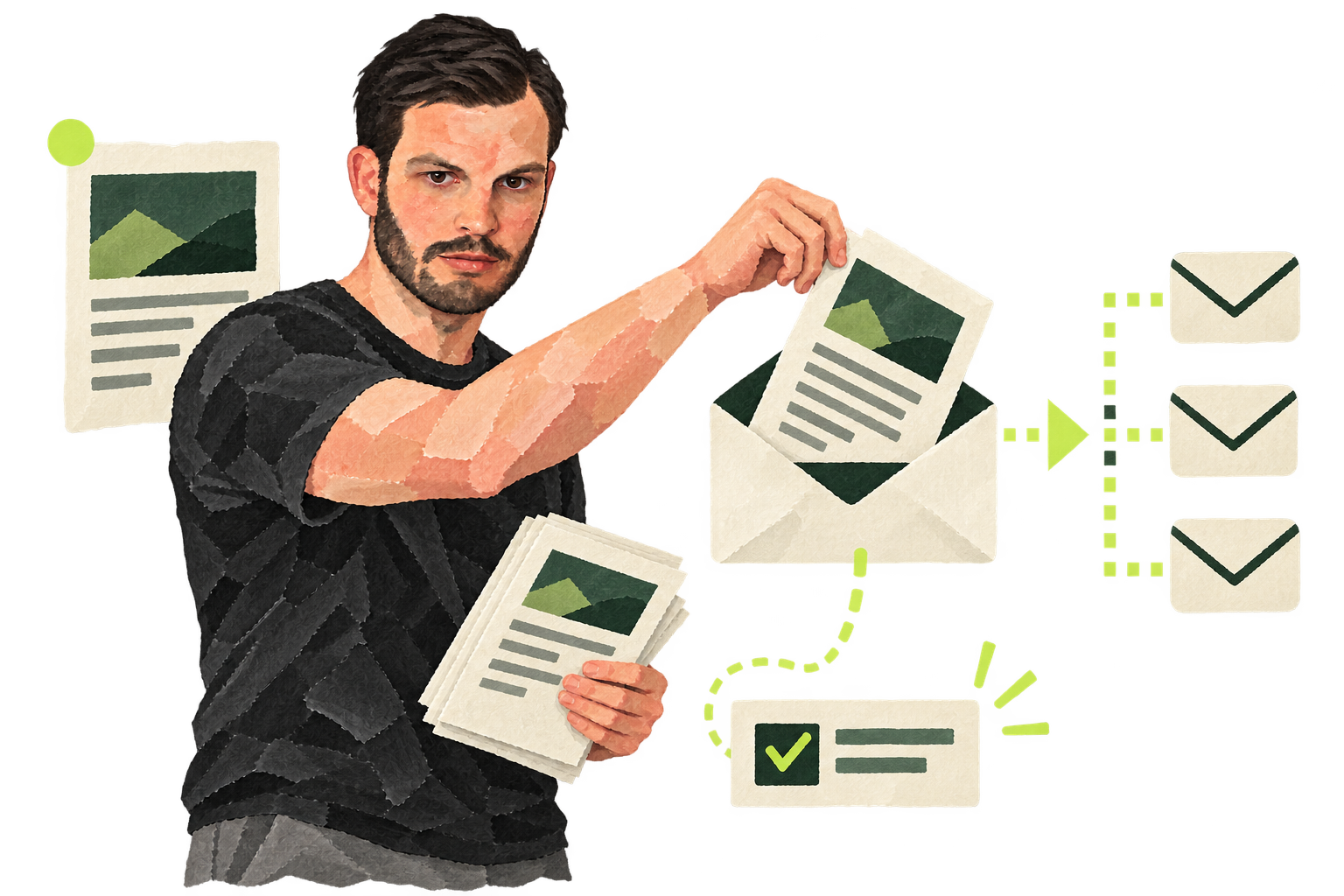
If you blog regularly, you may want to tell interested readers about new articles. In 2011 I described FeedBurner as a simple way to turn an RSS feed into email updates. Readers subscribed and received a message when a new post appeared.
That particular route is gone: Google ended FeedBurner's email subscriptions in 2021. The underlying RSS feed may still work, but FeedBurner is no longer a current way to send automatic newsletters. Do not leave old subscription forms in place if they no longer deliver email.
Make the promise specific
People are more likely to subscribe when they know what they will receive. You might say you will email each new article in your field, or collect the best pieces once a month. These are different choices. An automatic message for every post can suit a quiet blog, while a periodic digest may be kinder to readers when you publish often.
Choose a current email service with an RSS or website connection, or compile the digest yourself. Send a test to your own address to inspect the subject line, article link and unsubscribe option. The email should lead to the article rather than contain a messy copy of the entire page.
Subscription is a choice
Ask clearly for permission to send updates and explain how readers can leave. Keep the list tidy and handle addresses carefully. Open and click statistics can help you learn which topics attract interest, but they do not tell you perfectly who read every message.
The useful idea in my FeedBurner article was to give readers a direct route to new writing. The tool has changed; the relationship with a willing audience remains.