Being an entrepreneur gives me freedom, but my income is not fixed. It changes with the success of my projects and the investments I make.
That calls for a different approach to money. Clear budgets help me spend without constantly worrying about what I can afford.
https://twitter.com/then_there_was/status/1145724075597107201
A budget helps me control expenses without feeling deprived. When I know my limit in each category, I know when to stop. I can also adjust those limits when my circumstances change.
Budgets
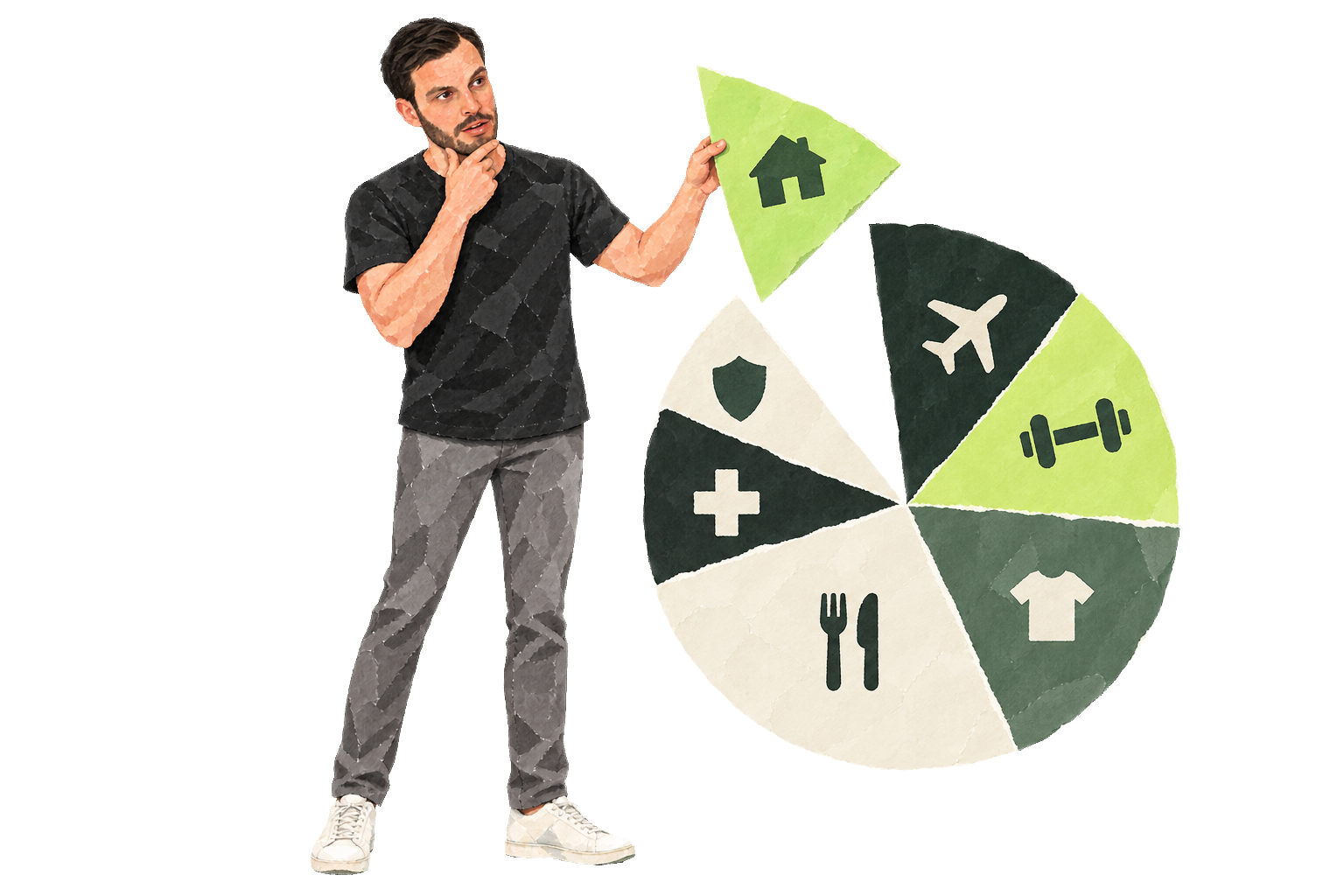
I use seven categories, each with a monthly spending limit:
Housing
I set aside up to €1,500 a month for housing, mostly for Airbnbs. That is 60% of my total budget, but a comfortable place to live matters a lot to my happiness.
At the time, I earned reward points by paying with my American Express Gold Card. I could use those points toward flights or accommodation, which gave me some value back on money I was already spending.
Leisure
I allow up to €300 a month for leisure. That includes my gym membership, Spotify, ebooks, concerts, occasional meals out, and drinks with friends.
Groceries
My grocery budget is €400 a month. Eating healthy —for example, grass-fed beef, organic eggs, and wild-caught fish—can cost more than cheaper processed options. For me, food is one of the last areas where I want to cut corners.
Clothing
I budget €50 a month for clothes. Since I reduced my belongings to only a backpack, that is enough for me. You may not need as many clothes as you think. Look through your wardrobe and count what you actually wear.
Healthcare
I set aside €50 a month for physiotherapy and dental bills.
I chose not to buy extra insurance for those costs. In my case, paying them directly has seemed cheaper than the premiums.
Transport
I raised my transport budget to €100 when I began traveling more. It covers flights, public transport, and petrol when I borrow a car.
Insurance
I spend €100 a month on insurance. At the time, I kept only the cover I was required to have: liability insurance and basic health insurance with a high deductible. That suited my budget.
How I manage the budgets
Here is the monthly breakdown:
- Housing: €1,500
- Leisure: €300
- Groceries: €400
- Clothing: €50
- Healthcare: €50
- Transport: €100
- Insurance: €100
Together, those limits add up to €2,500 a month. I therefore aim to earn at least €2,500, or about €83 a day. At the time, that income came from my products and some consultancy.
When I earn more, I put the remainder into a retirement account to invest strategically or buy Bitcoin. I also plan to buy real estate.
I use Bunq to keep these budgets separate. At the time, the Dutch bank offered 25 accounts under one subscription, and I used one account for each category.
Automatic payments come from the relevant account. For example, my health insurance premium is paid from the insurance account.
The app also gives me physical and virtual cards that I can connect to those accounts. Its overview shows me what remains in each budget at a glance.
On the first day of each month, automatic transfers top up the budgets from my main account.
Adjustments
Every month, I record my spending in a Google Sheets workbook, which compares monthly and yearly expenses with my budgets. If you would like a blank copy, contact me. Once a year, I review the figures and adjust the budgets for the year ahead.