
After catching a virus, I felt unwell for quite some time. During my recovery, I found that heart data could tell me something my subjective sense of readiness missed.
I am not referring to mood or simply to beats per minute (BPM). I mean heart rate variability (HRV), a measure that was new to me and that I now use to help plan my training.
We often describe a heartbeat by its average rate. Yet the time between individual beats varies slightly.
That variation, often measured in milliseconds, is called heart rate variability. It can offer a clue to how the body is responding to stress.
A coherent heart rhythm is defined as a relatively harmonic signal with a very narrow, high-amplitude peak in the low frequency region of the power spectrum and no major peaks in the other bands.
https://twitter.com/gijsheerkens/status/1522171190525239299
Resting HRV is highly individual. I compare my readings with my own baseline rather than someone else’s.
The value of your HRV at any given time is affected by activity in your autonomic nervous system.
Physical exertion, stress, poor sleep and other factors can lower HRV.
Many ordinary activities place demands on the body:
- Poor sleep
- Social interaction
- Eating garbage
- Reading
- Getting sun
- Walking
- Riding bicycle
- Household chores
- Watching TV
- Working out
Rest, recovery and adequate nutrition may help it rebound.
From an athletic perspective HRV is a great overall physiological marker. A relatively high reading can suggest that a person is well recovered.
As fitness improves, baseline HRV may rise too, though individual trends matter more than a single number.
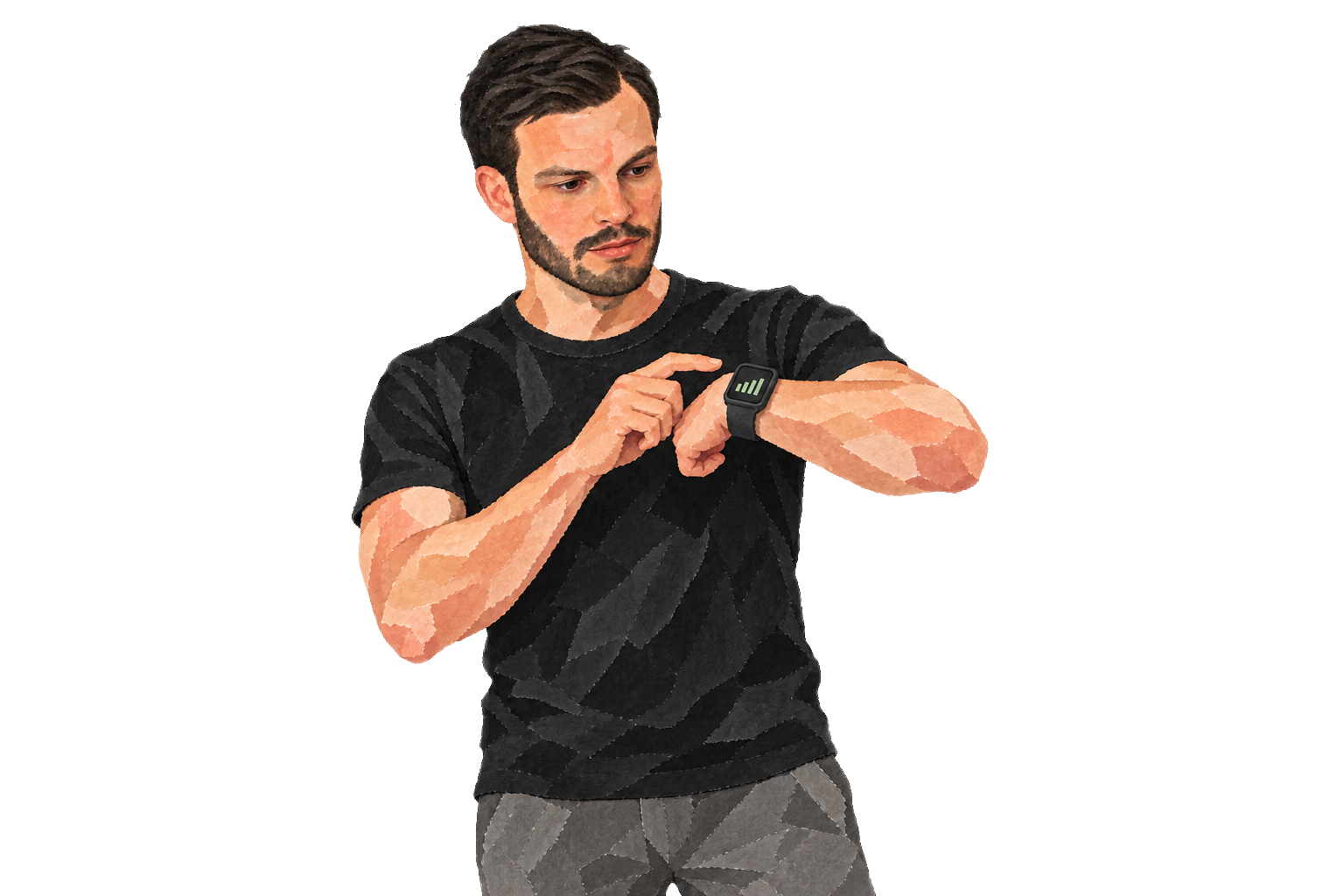
I'm using Training Today app on my iPhone to determine if I'm ready to train. This app uses the Apple Watch to monitor HRV and is comparable with Garmin's Body Battery.
The Apple Watch automatically measures HRV when I am in a relaxed state. Several readings across a day help the app identify a trend.
Training Today takes these readings and compares them against a 60-day HRV baseline to produce a score that can be used as guidance in deciding if you are in good condition to complete an activity (RTT, Readiness to Train).
The scores are linked to heart rate zones in its recommendations.
HRV has been studied for years, but wearable technology has made it easier to use in everyday training.
Finally, a good reason for me to wear a smartwatch.