
After writing about the freelancer's contradiction, people often ask where ideas for side projects come from. For me, they often begin with a problem I want to solve for myself.
I have approached ideas this way since I began building side projects. Later, when I read the bootstrapper's handbook Make, I recognized the same approach in its pages.
Daily frustrations often make me wonder whether a useful product could solve them. Let's look at some examples:
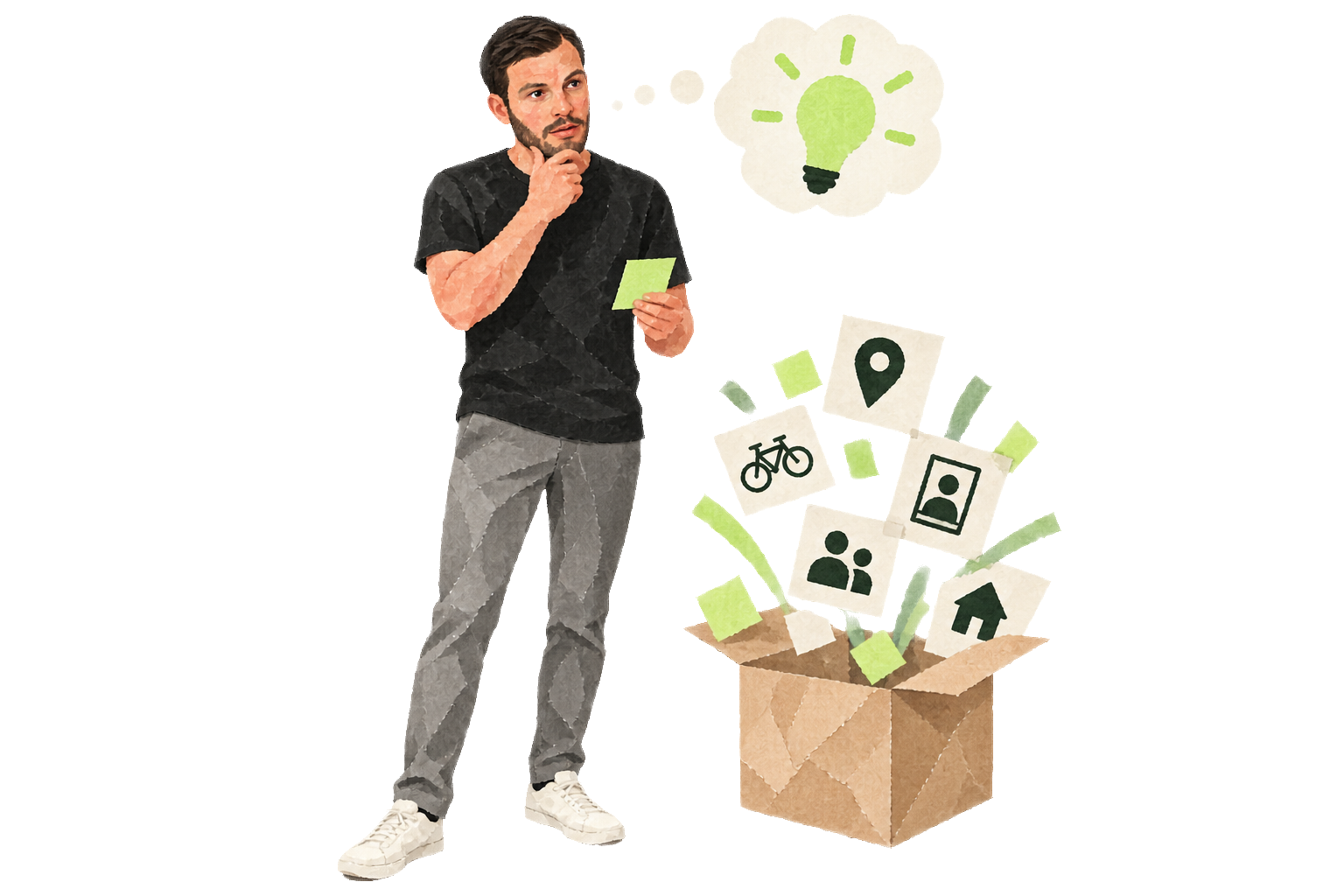
- When I was in Berlin, I experienced choice overload because of an overkill of bike sharing apps. So I built a minimum viable product with an overview of bike sharing services per city, characteristics, pricing and reviews. The idea eventually failed because reliable data and reviews were too difficult to collect.
- In 2009 I needed a passport photo to get a new passport. I wanted to make the photo online but this service didn't exist. So I called my friend Paul and we started to build an online passport photo solution, which has since become my main source of income.
- With my business partner at CaPPr's, we experienced friction in working together at times because our personalities differed. I came up with the idea to use our personality inventory to match our profiles and generate a user guide to build a good relationship and work together more effectively, both at work and in private life. The product called Personal User Guide now has 1000+ users.
- When I lived in Barcelona, I kept showing visiting friends the same local spots. I came up with the idea of selling an email series with all these tips to tourists via Facebook ads. I wrote the emails, set up the autoresponders in MailChimp and some Facebook ads as an experiment. The idea failed because it was too expensive to get leads in this highly saturated market.
- When I am traveling to new cities, I often struggle to choose a neighborhood when searching for an Airbnb. So I started to work on a tool that recommends areas based on your personality, called Wherebnb, that is still under construction.
Those examples show how ordinary problems can suggest ideas worth testing. You do not necessarily need to code; I do not code either. I will write about building MVPs without coding in another article.
The big advantage of this strategy is that you are the customer yourself. You understand the problem firsthand. You can learn the subject as you build, rather than arrive as an expert. That's what happened to me with the photos and the personality tests, too. That is compound interest as a side effect.
If ideas are not coming, changing your routine may help. Perhaps your attention is being drawn toward cheap dopamine addiction. Travel has helped me find ideas because new experiences make familiar problems look different.