Many of us develop habits of thinking that include harsh judgments about ourselves. Recognizing those patterns may help us begin to change them.
Becoming aware of self-criticism can bring another round of it: we judge ourselves for being stuck in the pattern.
In Beyond Addiction, Jan Geurtz argues that we all carry negative beliefs about ourselves. They are stronger or harder to notice in some people than in others.
We're talking about thoughts like:
- I'm stupid
- I'm dumb
- I'm weak
- I'm bad
- I'm useless
- I'm not good enough
- I don't belong here
- I'm a failure
- I'm selfish
- I'm mediocre
- I'm a coward
- I'm lazy
- I'm weird
- I'm ugly
- I'm ordinary
- I'm a loser
The list is endless.
No one is born with negative self-beliefs. As babies, we have no consciousness of ourselves at all, let alone a negative belief about ourselves.
Geurtz suggests that a child's sense of identity develops partly through limits on how freely they can express themselves. This is a completely natural developmental process, because after the birth mother and child are increasingly separated.
After that, the number of rejections a child has to endure increases when it learns that it cannot always express itself freely, and which behavior is accepted.
Limits are a normal part of upbringing.
In this phase, the beginning of negative belief and the thoughts listed above arise. This is a necessary natural process of identity development.
In Geurtz's account, even loving parents cannot prevent every negative belief from taking root.
This does not mean that every child has had a terrible childhood, though. For most people, their developed identity does not cause problems until adulthood, without even realizing it themselves.
Those early beliefs can follow us into adulthood.
https://twitter.com/FitFounder/status/1317072386953445380
Geurtz describes identity as a construct that can hide a feeling of not being good enough. A construct that is based on a mistake as a result of our parents' rejections when we were little.
Throughout our lives, we do our utmost to hide the false negative self-image from others. The ways we hide that feeling may also reinforce it. In his account, that is one path into addiction.
We get addicted to hiding the illusion of negative belief, but in reality the addiction makes us feel even worse about ourselves every time we fall for it.
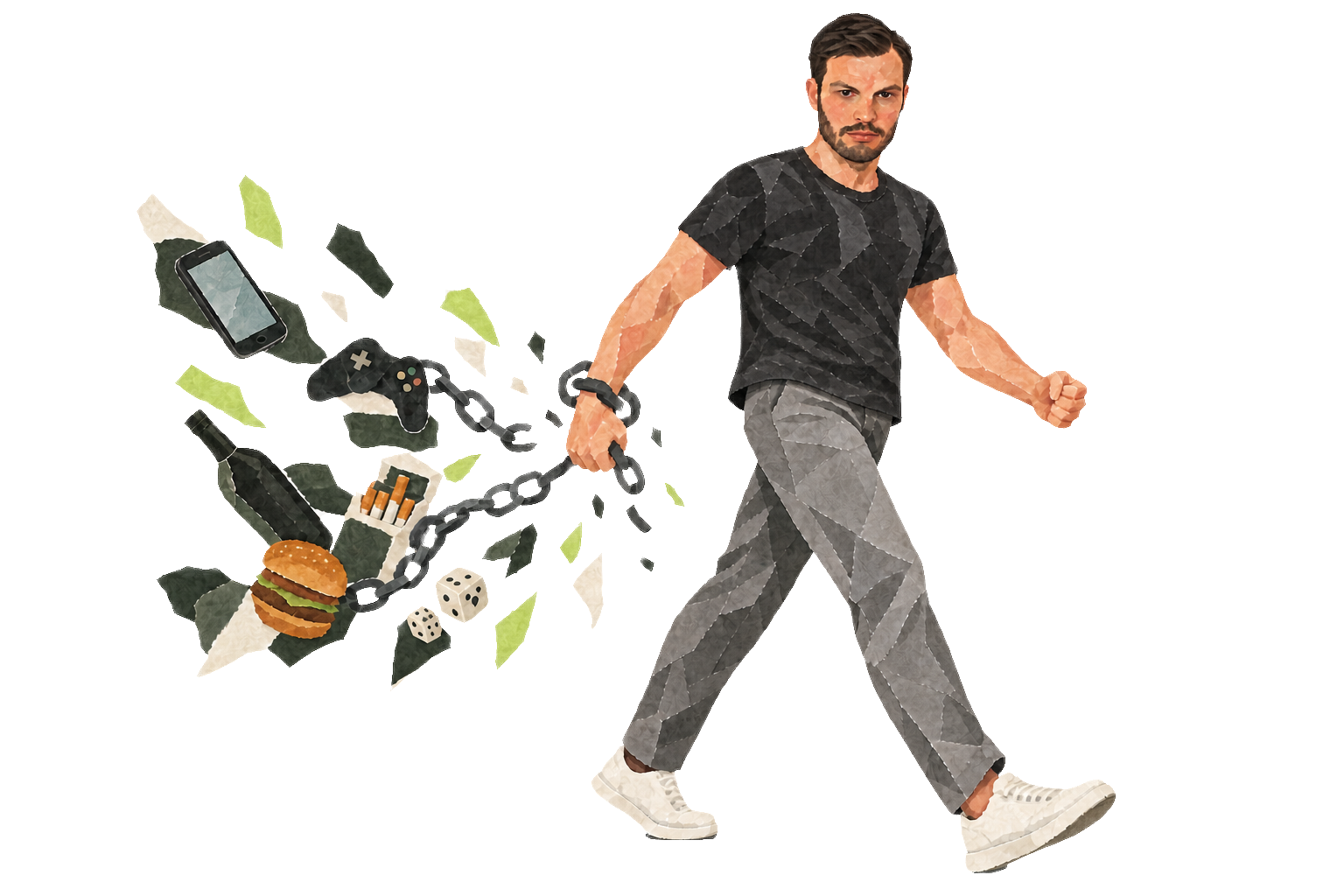
Common addictions are:
- Eating addictions
- Relationship addictions
- Sex addictions
- Alcohol addictions
- Smoking addictions
- Drug addictions
- Medicine addictions
- Gambling addictions
- Smartphone addictions
- Social media addictions
- TV addictions
- Gaming addictions
These habits can distract us from uncomfortable feelings and offer quick rewards, even when they cause problems over time.
Some people try to escape their feelings of discomfort by eating all the time in search of short term satisfaction.
Some people are so lonely they try to hide it for themselves by searching for relationships and doing everything to maintain them in fear of being abandoned.
Some people are dissatisfied with their lives and search for external sources of happiness like lotteries and slot machines because they don't have enough self esteem to change it themselves.
Some people start smoking to get rid of unpleasant compulsive thoughts, creating more compulsive thoughts.
And the most common addiction nowadays might be smartphones and social media. In quiet moments, we may reach for our phones to escape discomfort.
This is the illusion Geurtz asks us to notice.
When I notice the pattern, I have a chance to respond differently: to act on what matters to me rather than on an old belief about myself.