
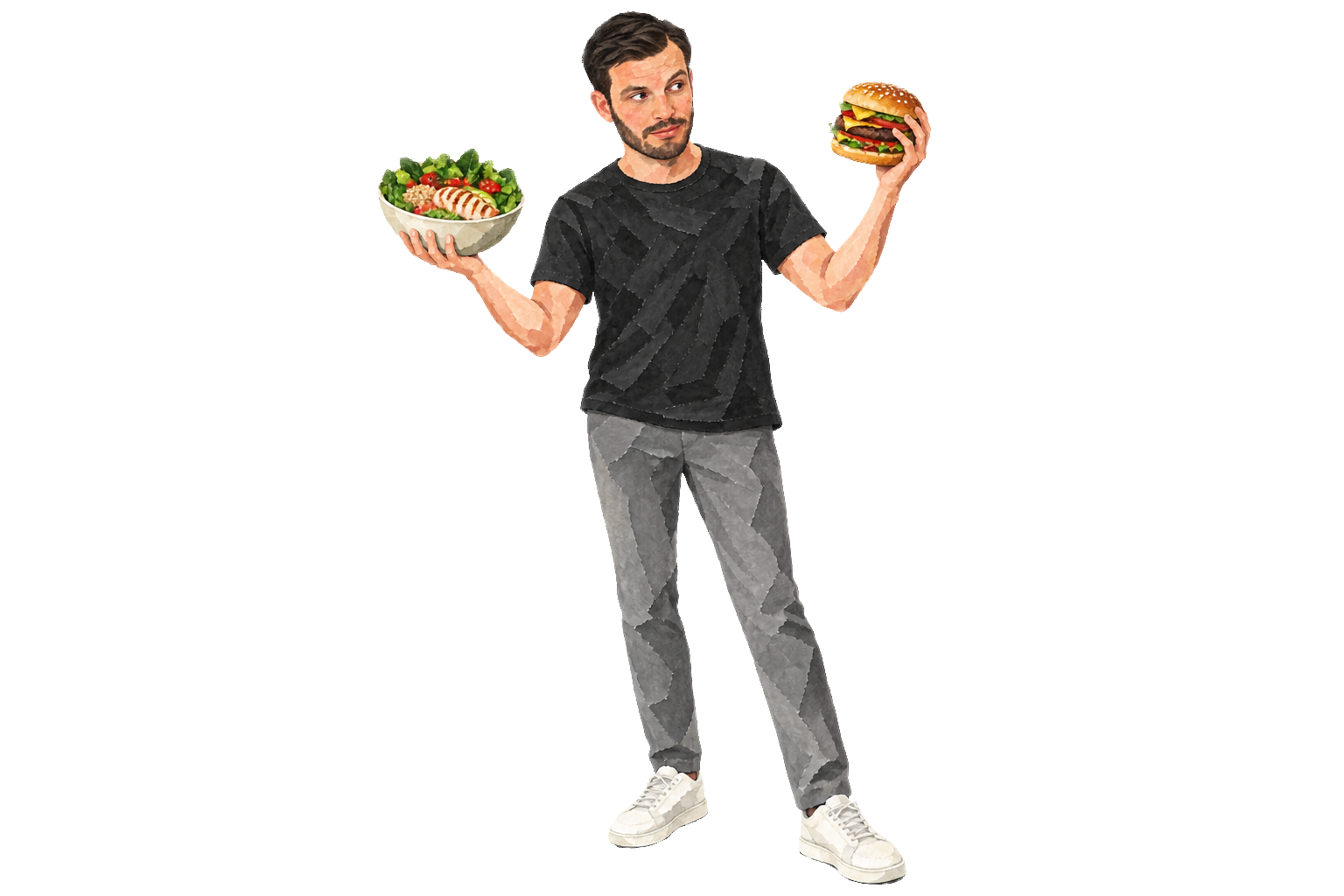
I am about to reach a 1,000-day streak on MyFitnessPal, where I track calories and macronutrients. That seems like a good moment to explain what I have learned.
https://twitter.com/gijsheerkens/status/1139441698289926144
People who want to lose weight often start exercising before looking at how much they eat. Exercise is good for health, but in my experience, food intake makes a bigger difference to weight loss. A 30-minute run might burn around 300 calories—roughly the energy in two beers, an avocado, or four slices of bread.
If your goal is to gain, lose, or maintain weight, it helps to understand how much energy you take in.
Maintenance calories
Your maintenance level is the amount of energy your body uses in a day. Breathing, thinking, and circulating blood all require energy, which we measure in calories.
You can estimate your maintenance level with this tool.
Gain weight
If you have a low BMI or are working out to build muscle, gaining weight may be part of your goal.
That usually means eating more calories than you use. A surplus may lead to weight gain over time, although the change is too small to see from one day to the next.
Unused energy can be stored as body fat, which becomes more noticeable over time.
A commonly used estimate is that one kilogram of body fat represents about 7700 calories. On paper, a surplus of 500 calories a day for about 15 days could add roughly one kilogram of body fat. Real bodies do not follow the calculation perfectly.
Lose weight
If your goal is to lose body fat, you generally need to eat less energy than your body uses over time.
That creates a calorie deficit. Day-to-day weight can still fluctuate, but a sustained deficit can lead to gradual fat loss.
Using the same rough estimate of 7,700 calories per kilogram, a deficit of 500 calories a day for about 15 days could mean roughly one kilogram of body fat lost in theory.
Maintain weight
To maintain your weight, aim to eat roughly as many calories as you use.
In theory, with no lasting surplus or deficit, your weight should stay around the same level. Daily fluctuations are normal.
Macros
Once you have an estimate of your energy needs, you can adjust your intake for your goal. I find it easier to change what I eat than to try to burn off extra calories through exercise (via negativa).
I use MyFitnessPal to track calories and macronutrients. The three main macronutrients that provide energy are:
- Carbohydrates: about 4 calories per gram. Sources include vegetables, fruit, legumes, and brown rice.
- Protein: about 4 calories per gram. Sources include meat, poultry, and quark.
- Fat: about 9 calories per gram. Sources include avocado, nuts, olive oil, eggs, and fatty fish.
What about someone who seems able to eat cake all day without gaining weight? She may simply eat less at other times. Even so, that does not mean her diet is healthy. You could eat pizza or cake and still maintain your weight if your overall intake stayed near your maintenance level.
Tips and tricks
Here are a few things that help me manage calories and macronutrients. I may add to this list over time.
- Think about lasting eating habits rather than a short-term diet.
- Plan ahead. If you are going out for dinner, you might choose a lighter lunch.
- Try not to drink many calories. I usually choose water, sparkling water, black coffee, or zero-calorie soft drinks.
- Keep high-calorie snacks and sweets out of reach if you would rather not eat them.
- Pay attention to protein. My own target is around 30% of my intake. Protein helps build and maintain the body and tends to keep me full longer. Foods I choose include quark, chicken breast, steak, and eggs.
- I also try to choose mostly unprocessed food with simple ingredients, such as eggs, meat, avocados, fruit, and vegetables.
- I limit refined carbohydrates.
- I aim for around 500 grams of vegetables a day.
- I avoid grocery shopping when hungry; that is when I am most tempted by snacks.
- I keep moving for 30–60 minutes a day.
- Feeling hungry now and then is not an emergency.