
A blood test and looking in the mirror can both tell you something about your metabolic health. Here are four other measures worth checking once or twice a year.
You can check several of these measures at home with simple tools. One, the triglyceride-to-HDL ratio, does require a blood test.
Together, these numbers can help you see where you stand and track changes over time. They are indicators, not a complete picture of your health.
https://twitter.com/Mangan150/status/1654894856043474945
Four measures to consider:
1. Waist-to-Height Ratio
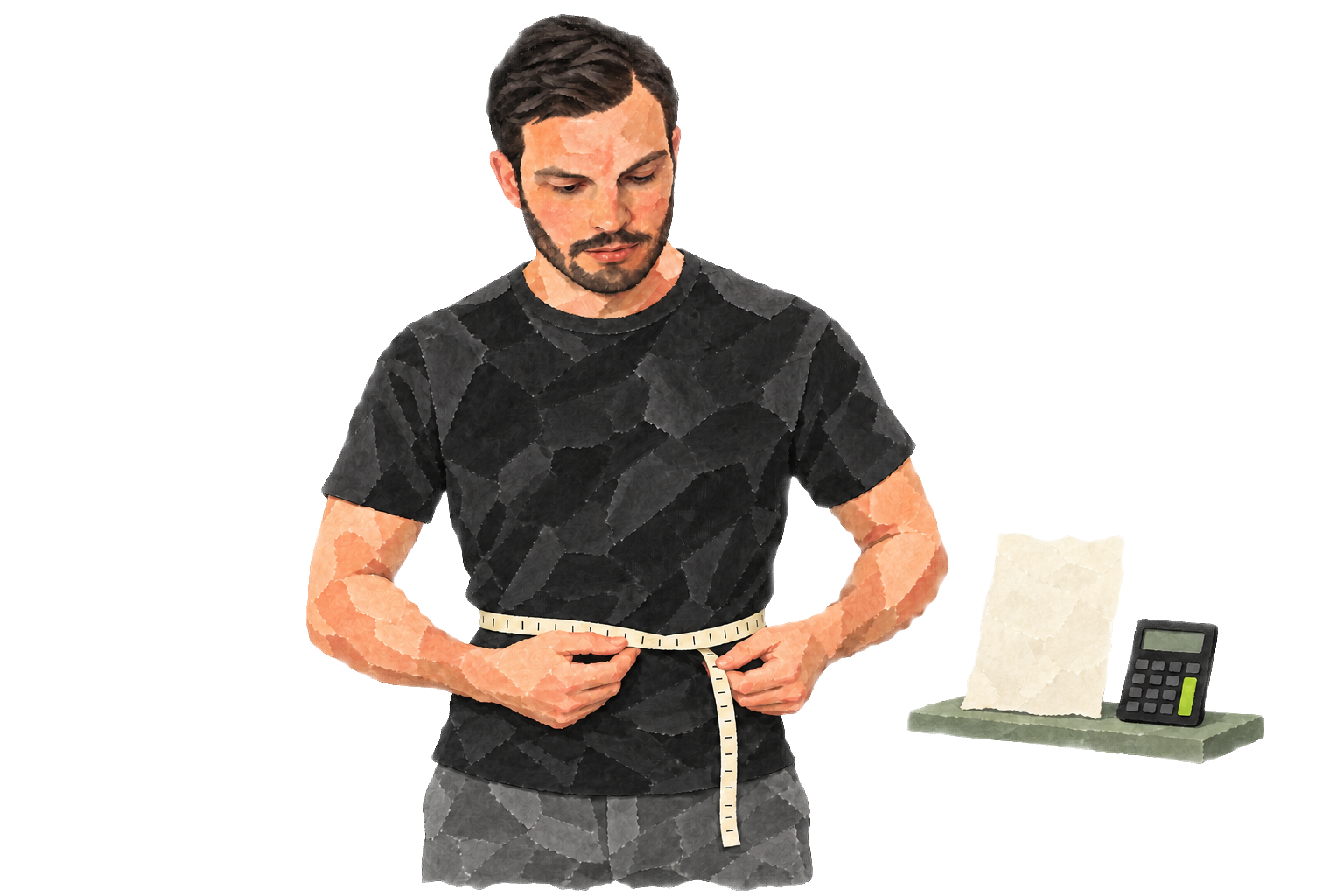
The waist:height ratio is a simple indicator of metabolic health. Measure your waist circumference at your belly button level and divide it by your height.
A result below 50% is commonly used as a healthy reference point. A higher result may be a reason to look more closely at body fat and metabolic health.
https://twitter.com/amerix/status/1512445780094816264
2. Ideal Body Weight
Body Mass Index (BMI) can be useful, but it has limitations. Ideal Body Weight (IBW) offers another reference point.
If you have a muscular build, the IBW figure may be lower than you would expect.
Below is an overview of IBW for men and women, measured in centimeters and kilograms.
- Male
- 152 cm — 50 kg
- 155 cm — 52,7 kg
- 157 cm — 54,6 kg
- 160 cm — 57,3 kg
- 163 cm — 60 kg
- 165 cm — 61,8 kg
- 168 cm — 64,6 kg
- 170 cm — 66,4 kg
- 173 cm — 69,1 kg
- 175 cm — 70,9 kg
- 178 cm — 73,7 kg
- 180 cm — 75,5 kg
- 183 cm — 78,2 kg
- 185 cm — 80 kg
- 188 cm — 82,8 kg
- 191 cm — 85,5 kg
- 193 cm — 87,3 kg
- 196 cm — 90 kg
- 198 cm — 91,9 kg
- Female
- 152 cm — 45 kg
- 155 cm — 47,7 kg
- 157 cm — 49,6 kg
- 160 cm — 52,3 kg
- 163 cm — 55 kg
- 165 cm — 56,8 kg
- 168 cm — 59,6 kg
- 170 cm — 61,4 kg
- 173 cm — 64,1 kg
- 175 cm — 65,9 kg
- 178 cm — 68,7 kg
- 180 cm — 70,5 kg
- 183 cm — 73,2 kg
- 185 cm — 75 kg
- 188 cm — 77,8 kg
- 191 cm — 80,5 kg
- 193 cm — 82,3 kg
- 196 cm — 85 kg
- 198 cm — 86,9 kg
3. Insulin Resistance
Cholesterol is, in my view, an overemphasized metric. I believe commercial interests have shaped the way it is discussed, paid for by Big Food in the seventies.
Even so, two figures in a lipid panel can be useful here: triglycerides and HDL. Their ratio is often used as a proxy for insulin sensitivity.
To calculate the triglyceride-to-HDL ratio, divide your triglyceride value by your HDL value. In the ranges used here, above 2 suggests higher risk, below 2 is considered healthy, and below 1 is considered optimal.
If your values are in mmol/L, make sure to convert them to mg/DL before calculating the ratio.
4. Blood Pressure
For blood pressure, aim to stay within the normal range. Excess body fat can contribute to high blood pressure.
The categories are:
- Normal
- Upper < 120
- Lower <80
- Prehypertension
- Upper 120-139
- Lower 80-89
- Hypertension Stage 1
- Upper 140-159
- Lower 90-99
- Hypertension Stage 2
- Upper >160
- Lower >100
- Hypertensive Crisis
- Upper >180
- Lower >110
Metabolic syndrome is diagnosed using several criteria. My goal is to stay outside the risk ranges listed above.
Lifestyle factors are the main drivers of metabolic health, so even with less-than-ideal genetics, most people can improve their metabolic health with a lifestyle that prioritizes health. Whatever your starting point or age, sustained changes may improve your metabolic health over time.