
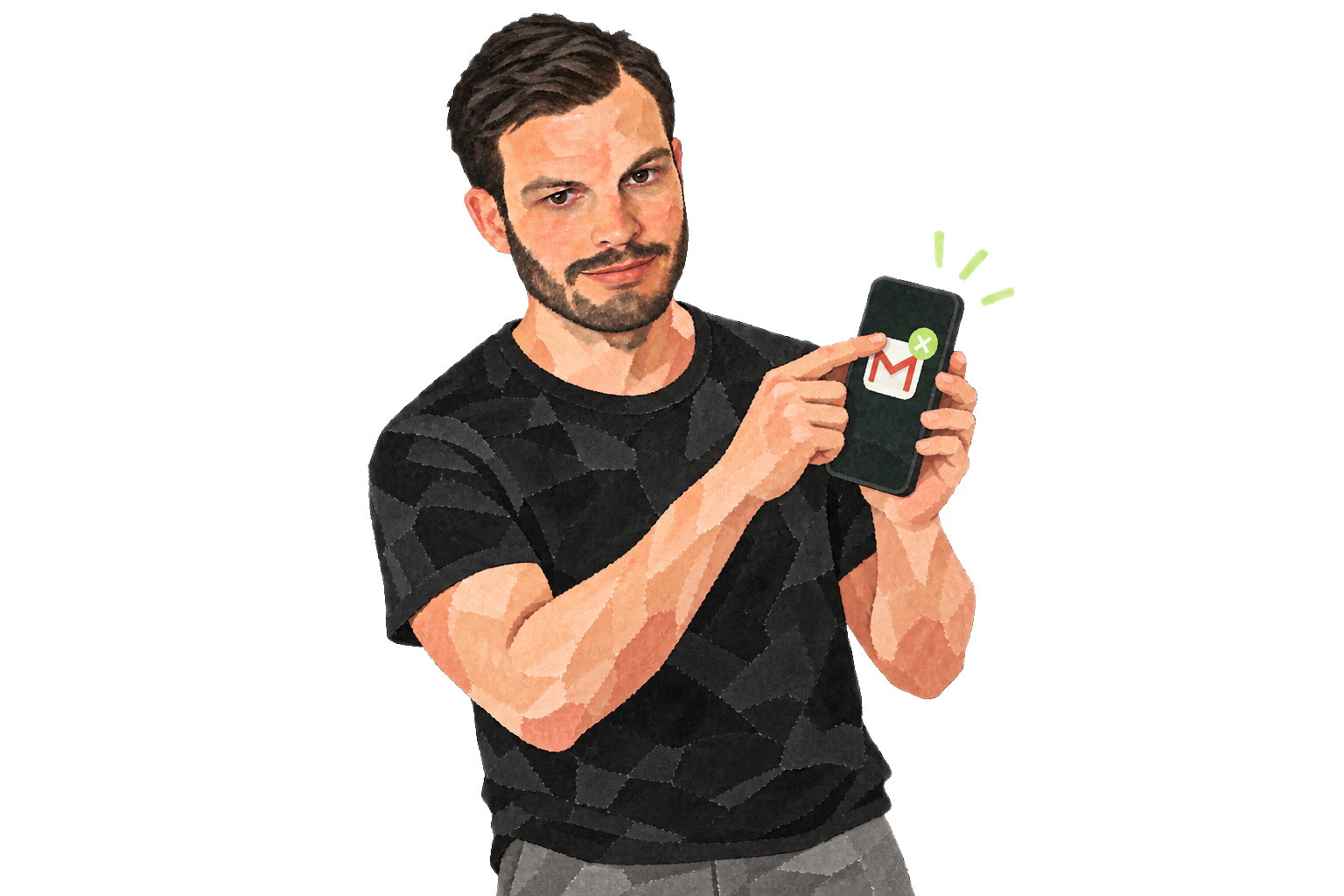
Email has been around since the sixties, persisting alongside other ways to communicate, including phone calls and social media. Smartphones, however, have made it easy to waste time checking the inbox compulsively.
Your dopamine addiction may be part of the attraction. We are wired to seek dopamine releases to stay motivated and survive, but our modern life is full of cheap hits that don't require any effort.
Email offers one of those quick rewards. You keep looking for something new and rewarding in your inbox.
Most people have their inbox within reach in an app on their phone, including notifications for each incoming email. They glance at each new message, breaking their concentration, only to revisit it and reply later.
Why would you want to receive email on your phone anyway? Why would you want to read email when you are hanging around with friends, having dinner or exercising?
That email can wait. If something is urgent, the sender can use a faster channel.
I deleted the Gmail app from my phone a few years ago and usually check email twice a day, reply to messages then and adding new tasks to my public to-do list.
This works fine, because I'm always responding within 24 hours, and it gives me peace of mind to focus on the activities I'm doing.
An additional advantage of this is that people don't get used to quick replies. It also sets expectations. If you are replying immediately all the time, they expect you to do so all the time, and you keep emailing all the time.
Otherwise, it is easy to get stuck in long email exchanges that encourage reactive work and a constant sense of being busy.
So, what you might want to do is:
- Delete your email from your phone.
- Open your inbox twice a day, at fixed times, on your computer.
- Read all emails only once and process everything immediately.
You'll notice that most issues will resolve themselves before you reply, and that you'll receive fewer emails over time.