Many of the pressures of modern life come with abundance: constant stimulation and little room to pause. I have come to think of meditation as making space to do nothing, even though I find that surprisingly hard.
The definition of meditation is:
Think deeply or focus one's mind for a period of time, in silence or with the aid of chanting, for religious or spiritual purposes or as a method of relaxation.
We are exposed to stimulation throughout the day. Quiet moments can be hard to find. Every single moment of the day there is something that wants your attention, whether it's your phone, your work, your partner, your business, your laptop, your tablet, your social media, your Netflix or your book.
Even enjoyable activities ask for our attention.
I need to turn things off occasionally. Being constantly occupied leaves me restless.
Joe Rogan spoke about meditation with Naval Ravikant on his podcast. That conversation helped me see meditation as time spent doing nothing, rather than another task to master.
I have tried meditating several times, usually when I was already stressed. I would rather make it a regular practice before I reach that point.
I tried apps, YouTube videos and simply sitting on my own. Each time I stopped after a while, even though the practice seemed to help me feel calmer. So this is a new habit I want to implement in my life.
I had been making meditation more complicated than it needed to be.
The purpose of meditating is to get to the point where you can think of nothing at all, for several minutes. This takes time and practice.
I do not need an app or a video. I can begin by sitting down and allowing a quiet moment.
https://twitter.com/DeeperThrill/status/1147639668684537862
@DeeperThrill wrote a thread on Twitter about some of the things you can do to trick your mind into meditation:
- Sit down, close your eyes, and ignore your thoughts.
- Look for patterns in the white noise in the back of your eyelids.
- Count your breaths to 100.
- Try not to think about anything, but instead listen to the thoughts in your head until they speak in complete sentences.
- Stare at a patch of paint for 20 minutes
- Stare at the second hand of a clock for 20 minutes.
- See if you can smooth out your breath until there's no distance between inhales/exhales.
- Try to feel your body from the inside out, noticing little pockets of tension or ickiness.
- Try to be so present that you notice micro-movements in the environment (like the subtleties of a leaf blowing in the wind).
- Pay attention to someone's facial micro-expressions while you listen to them.
- Try to let any vision enter your imagination in rapid succession. You'll get like 3 images/second flowing in if you're doing it right.
- Try to feel gravity.
- Listen to the texture of sound, not the content. There's always sounds around you.
There are many ways to pause for a moment. In the beginning, you won't be able to do any of these for more than two seconds.
With practice, those moments can add up. You'll start noticing more focus and more peace of mind.
https://twitter.com/TheAncientSage/status/1207613531316768768
I need time to absorb and process what happens in my life. Partly this happens when we sleep, but we need those moments during the day, too.
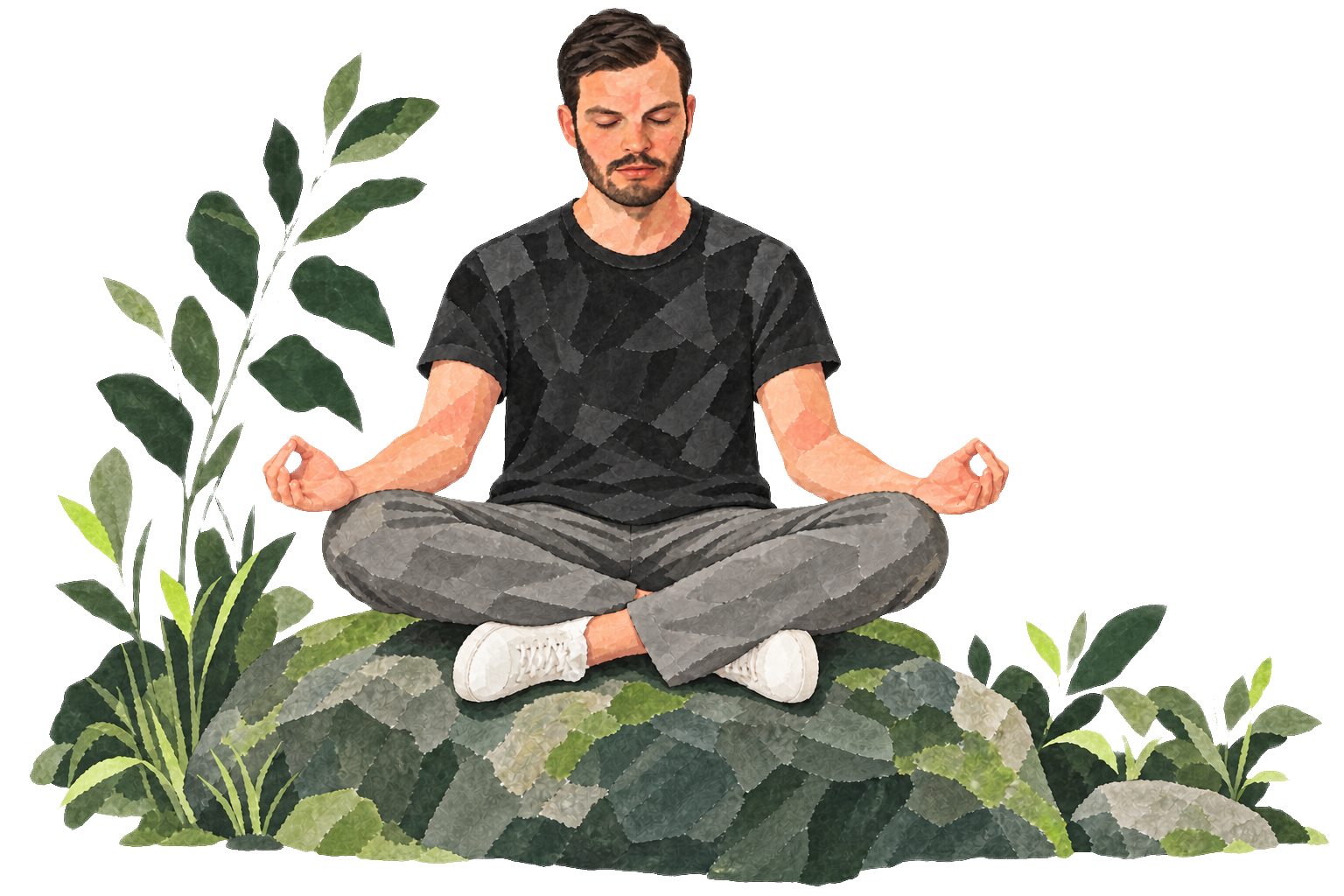
I sit down and give my thoughts room to settle. Just close your eyes, and think whatever comes up in your mind. There is no need to put effort in it.
That's the point you want to reach, and that's where meditation starts.