
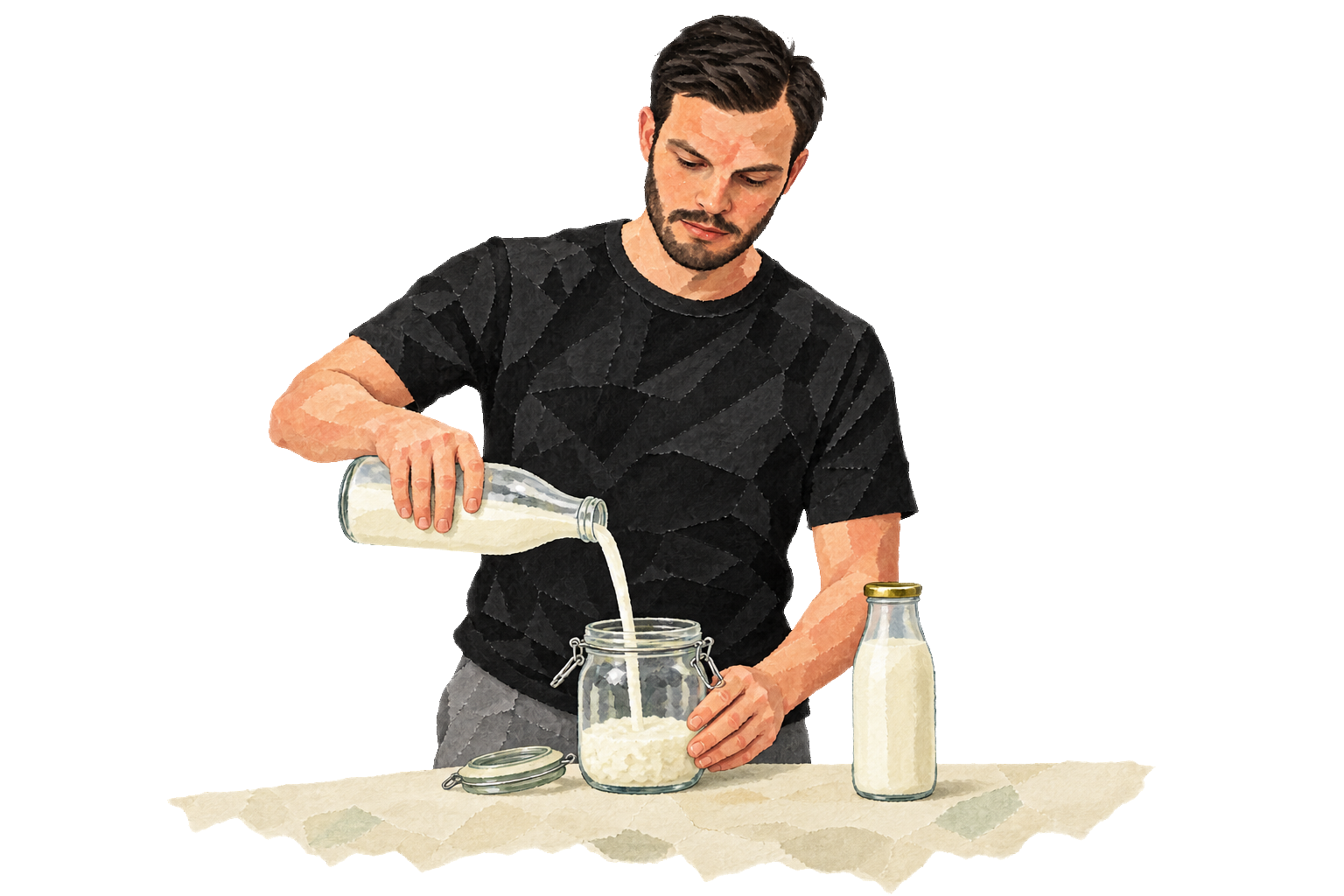
Kefir has long been valued as a fermented food. Because its cultures keep reproducing, you can use part of one batch to start the next.
This article is part of my series on traditional recipes you can make at home. The others cover ghee, sourdough bread, bone broth and ice cream.
Kefir is a fermented milk drink, similar to thin yogurt, made with kefir grains—a community of microorganisms.
It is a staple in many cultures and contains nutrients and live microorganisms. People often drink it for digestive health.
In fact, many people consider it to be more nutritious than yogurt.
Traditionally, people passed kefir grains and recipes from person to person.
https://twitter.com/JessicaGenetics/status/1556730973068206080
Kefir has extensive benefits:
- It is a rich source of calcium, protein, and B vitamins.
- It contains up to 61 different microorganisms, making it a much more potent source of probiotics than many other fermented dairy products.
- It contains the probiotics and carbohydrates that protect against harmful bacteria.
- It provides calcium and vitamin K2, both relevant to bone health.
- Some people find that it helps their digestion.
- It is low in lactose because its lactic acid bacteria have already pre-digested the lactose. People who have lactose intolerance can often drink kefir without problems.
How to make kefir
You can easily make homemade kefir. All you need is a jar with a lid and a glass bottle.
To start, buy a small bottle of kefir and some whole milk. Mix one part kefir with three parts milk in the jar, close the lid and leave it at room temperature.
The culture will ferment the milk. After about 24 hours, transfer the kefir to the glass bottle and refrigerate it.
For the next batch, shake the kefir, reserve a portion and add fresh milk. Repeat as long as the culture remains active.
https://twitter.com/gijsheerkens/status/1566411097422368769?s=21&t=L7yCmOV5PIMRx26aohPGHA