
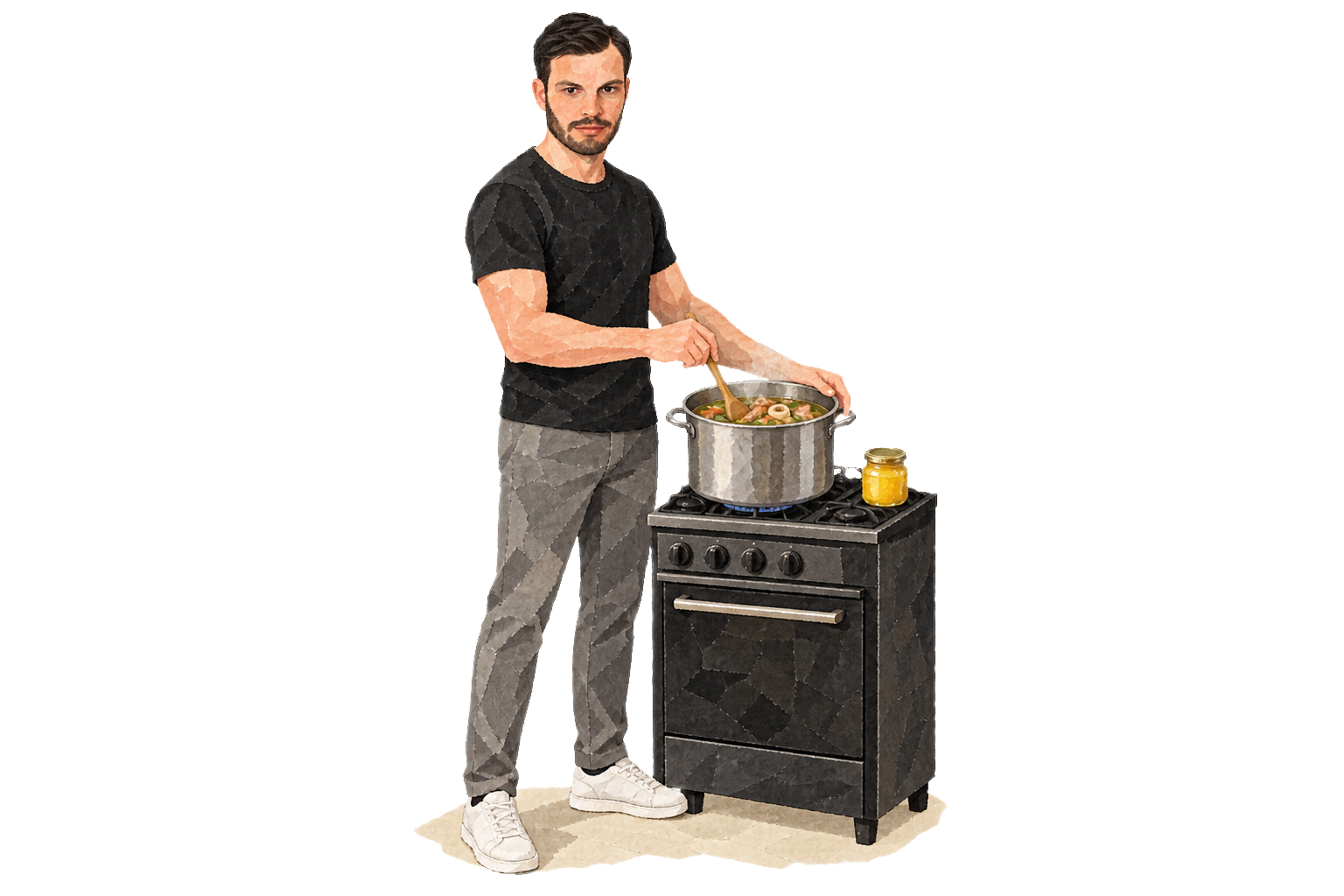
The Lindy effect suggests that ideas and practices that have lasted a long time may continue to endure. That makes me curious about traditional cooking.
I try to pay attention to what our ancestors ate and how they prepared it. Traditional techniques have stood the test of time, and I think some are worth bringing back into my kitchen.
I find much of what supermarkets sell unappealing. Many packaged foods contain sugar, seed oils and refined grains. For all their convenience, industrial food systems have trade-offs.
Food companies have to think about profit. Traditional methods often take more time and labor, which can make the finished product more expensive.
Lately, I have noticed more interest in nutrition. I think the pandemic may have played a part. I guess it might be temporary and people will probably start moving back to high time preference behavior soon, though.
There is still plenty of confusing nutrition advice, but I see this growing interest as a positive development. Some supermarkets have begun offering products I would not have found there before.
The downside is that healthy food is more expensive because of the labor intensity and costs of raw materials. In the western world the price of ghee is ~€25/kilo and bone broth is ~€10/liter, for example.
We can also learn to make some of these foods ourselves. It takes time, but I can find that time by spending less of it watching Netflix or scrolling Instagram.
I have been trying new recipes and writing about what I learn.
Each article explains why I make a particular food and how I prepare it. I add recipes after trying them myself.
The recipes:
Ghee
Ghee is clarified butter from India. The major advantages of ghee are that it is very resistant to heating and has a long shelf life.
It contains nutrients and may be easier for some people with lactose intolerance to use than butter. I also like its flavor.
Bone broth
Bone broth is a savory cooking liquid that forms the basis for soups, stews and sauces.
It involves simmering animal bones, meat, seafood, or vegetables in water or wine, often for an extended period.
Bone broth contains nutrients from the ingredients used to make it.
Sourdough bread
Sourdough is a bread made by the fermentation of dough using wild lactic acid bacteria and yeast, often for an extended period. Lactic acid from fermentation imparts a sour taste and improves keeping qualities.
Not only is it tastier than conventional bread, but it’s also arguably more nutritious. Sourdough bread is also less likely to spike your blood sugar and easier to digest.
Learn more about sourdough bread
Kefir
Kefir is a fermented milk drink similar to a thin yogurt that is made from kefir grains, a specific type of culture.
It is a staple in many cultures and contains nutrients and live microorganisms. Many people drink it for digestive health. In fact, many people consider it to be more nutritious than yogurt.
Ice cream
Ice cream is a sweetened frozen food typically eaten as a snack or dessert. It may be made from milk or cream and is flavoured with a sweetener and a spice or with fruit.
Ice cream is usually treated as a dessert. Making it yourself gives you control over its ingredients, including the milk you choose.