
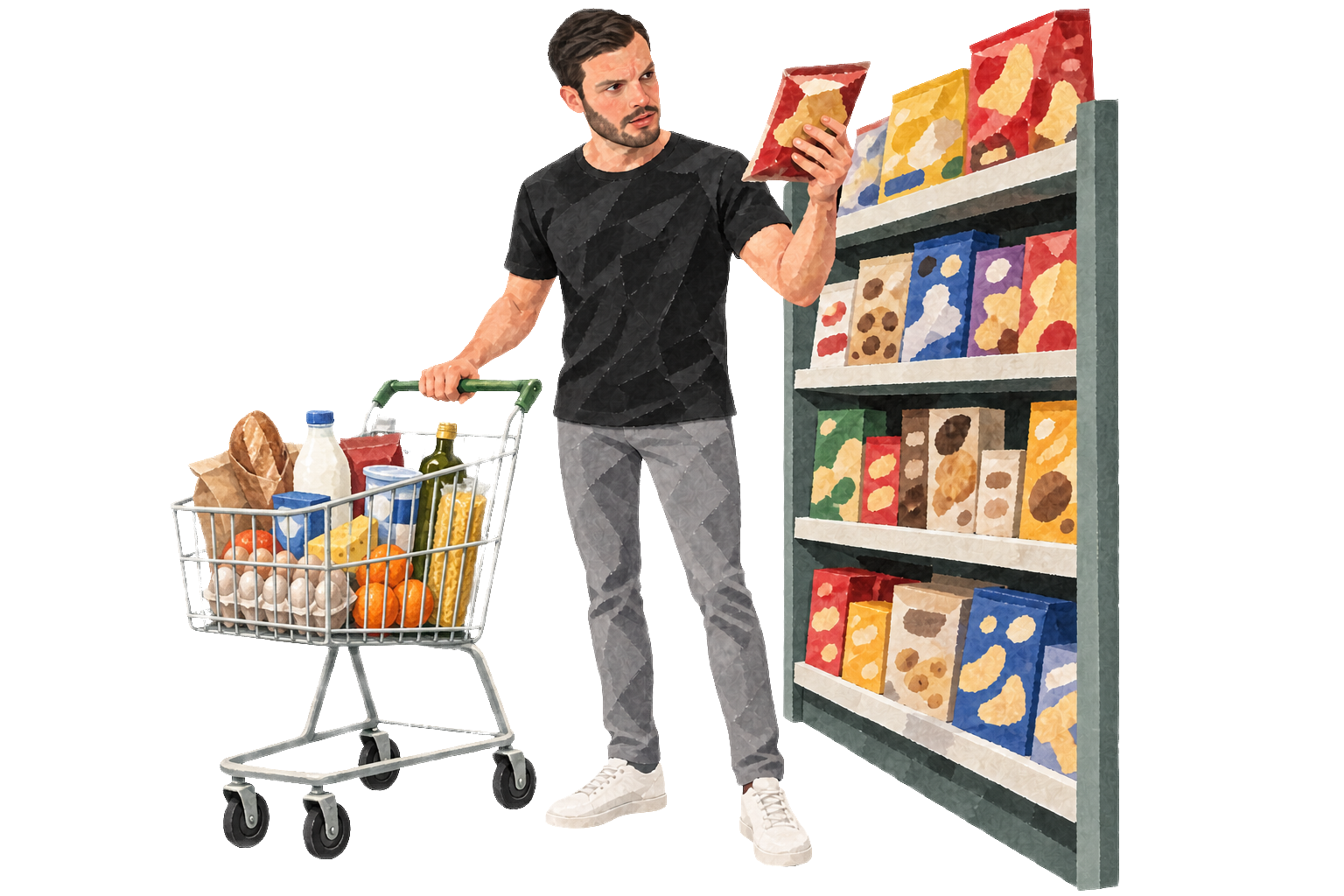
A modern supermarket can feel like an obstacle course. The confusing labels and marketing are easy to miss. Food companies are businesses, so their packaging is designed to sell as well as inform.
Look around any grocery store and you will see plenty of packaged, mass-produced food. Many labels list ingredients I do not recognize at a glance. A large share of the shelves is devoted to highly processed products that I usually avoid.
As a rough rule, I am cautious with products that have more than two ingredients, apart from E numbers. E numbers are codes for substances used as food additives for use within the European Union. They can affect a food’s properties and shelf life.
https://twitter.com/Mangan150/status/1215754830439862272
What to avoid
I pay particular attention to three ingredient groups that I try to limit:
- Vegetable oils like sunflower oil, corn oil, soybean oil and flaxseed oil. They can be high in omega-6 fatty acids, which may shift the balance between omega-3 and omega-6 in the diet. Repeatedly heating some oils can change their composition, which is one reason I avoid using them heavily.
- Added sugars, also known as dextrose, fructose, galactose, glucose, lactose, maltose and sucrose. Too much added sugar can contribute to tooth decay and crowd more nutritious foods out of the diet. The body regulates blood glucose closely. Frequent high intake can affect blood glucose and insulin and add energy that the body may store.
- Refined carbs like white bread, white pasta and white flour. These products tend to have less fiber and can raise blood glucose quickly.
I see these groups as relevant to insulin resistance, a risk factor in conditions such as type 2 diabetes and heart disease. That is why I read ingredient lists and compare options before buying.
Product categories
Finding foods I want to eat in a supermarket can take effort. I read a funny Spanish book about it; El jamón de York no existe (York ham doesn't exist).
Terms such as “homemade,” “rustic,” “original recipe,” “healthy,” “organic,” “vegan,” and “light” can sound reassuring without telling you much about the ingredients.
Food companies know how to use labeling rules in their marketing.
It takes a lot of time and resources to eat well. When shopping, it is easy to choose comfort and convenience over a closer look at ingredients. I put together this list of foods and the details I look for. The book was my main source.
- Eggs:
- Every egg has a red code printed on it (in Europe) that tells you where it's from. Buy only codes that start with 0 or 1, those codes tell you more about how the hens were raised.
- Don't go by words and photos on the packaging, they are often misleading.
- Dairy:
- I look for milk with one ingredient: milk.
- I look for yogurt made from milk and cultures.
- A simple cheese may contain milk, rennet, cultures, and salt.
- I usually choose full-fat dairy over skimmed versions. The fear of fat was made up by the industry. Furthermore, light products often have added sugars.
- Lactose is the natural sugar found in milk. If you tolerate lactose, you may not need a lactose-free version; check its label for added sugar.
- If you want your dairy to have a fruity taste, add the fruit yourself.
- Almond, soy, oat, and coconut drinks are plant-based alternatives to dairy milk. In some countries they are not even allowed to call it milk.
- Grains:
- For whole-grain bread, whole-grain flour should be the main ingredient, so this should be the first ingredient in the ingredients list.
- Rye or spelt labels alone do not tell you whether a bread is more nutritious.
- Sourdough bread and Ezekiel bread are traditionally prepared breads made by fermenting the dough. Some people find these breads easier to digest, and they can cost more because they take longer to prepare.
- Gluten is a group of proteins found in some grains. If you tolerate gluten, a gluten-free label is not automatically a reason to choose a product.
- Whatever the label says, healthy pastries, cakes or cookies don't exist.
- Plain whole-grain oats are a simple breakfast option with just one ingredient.
- Muesli and granola tend to have a lot of added sugars.
- I look for pasta with a short ingredient list, such as whole-grain wheat.
- For rice, the ingredient list should simply say rice.
- Legumes:
- Pre-cooked beans and chickpeas can be convenient; you can drain the liquid if you prefer.
- Quinoa is not a superfood, and I do not treat it as a magic ingredient.
- Fruits:
- Fruit contains sugar, so I pay attention to portions while still enjoying it.
- Juicing fruits extracts the fruit sugars without the fiber and can deliver a lot of sugar quickly, much like a soft drink.
- Vegetables:
- Frozen vegetables can retain nutrients and are a way to save money.
- Meat:
- Deli meat like ham, roast beef and chicken breast are often highly processed and have added sugars (often called dextrose).
- Ground beef can be made from smaller cuts left after butchering. I check the label because some packaged ground beef contains added ingredients. Buy your ground beef at the butcher's and let him mince it on the spot.
- Grass-fed beef can have a different fatty-acid profile from grain-fed beef. I do not often see grass-fed beef at the supermarket, so I ask the butcher whether it is available.
- Grass fed is twice as expensive and the difference in fatty acid types is not that huge, though. Ditching chicken is a cheaper way to change your ratio because chicken mainly has omega 6 fatty acids.
- Organ meats can be nutrient-rich and relatively inexpensive.
- Fish:
- Wild-caught fish can be hard to find in some supermarkets. A fishmonger may have more options.
- Canned tuna and other fish in extra virgin olive oil are cheap and a good option. Those in sunflower oil aren't.
- Frozen fish is cheaper and can be just as useful nutritionally.
- Fish oil may be useful if you are trying to increase your omega-3 intake.
- Oils:
- Extra virgin olive oil is the oil I use most often, though I still treat it as a source of energy. It is rich in monounsaturated fatty acids.
- I prefer less processed oils, such as olive oil, avocado oil, palm oil, coconut oil.
- Butter, ghee and lard are healthy options to fry.
- I tend to avoid margarine.
- I limit industrial seed oils such as sunflower oil, safflower oil, soybean oil, corn oil, flaxseed oil, grapeseed oil, cottonseed oil.
- Sugars:
- I distinguish sugar naturally present in whole foods, such as fruit or milk, from sugar added during processing.
- I try to limit added sugar.
- Honey is natural but very high in sugar.
- Dextrose, fructose, galactose, glucose, lactose, maltose, sucrose, syrup and 59 other names can all appear on ingredient lists as forms of sugar.
- I may use artificial sweeteners in moderation, while paying attention to whether they increase my craving for sweet foods.
Key takeaways
- I think health is the last thing I want to save money on, so I do not automatically choose the cheapest groceries. If I need to spend less, I look at leisure, housing, or transport first.
- A butcher or bakery may offer options you cannot find in a supermarket.
- Read labels and use what you learn to compare products.
- Choose less processed foods when you can. Buy whole foods.
- Eating out can make those choices harder, so I try not to make it a habit.
- Stay curious and look into the foods you buy.
https://twitter.com/EdLatimore/status/1191789912770711555