
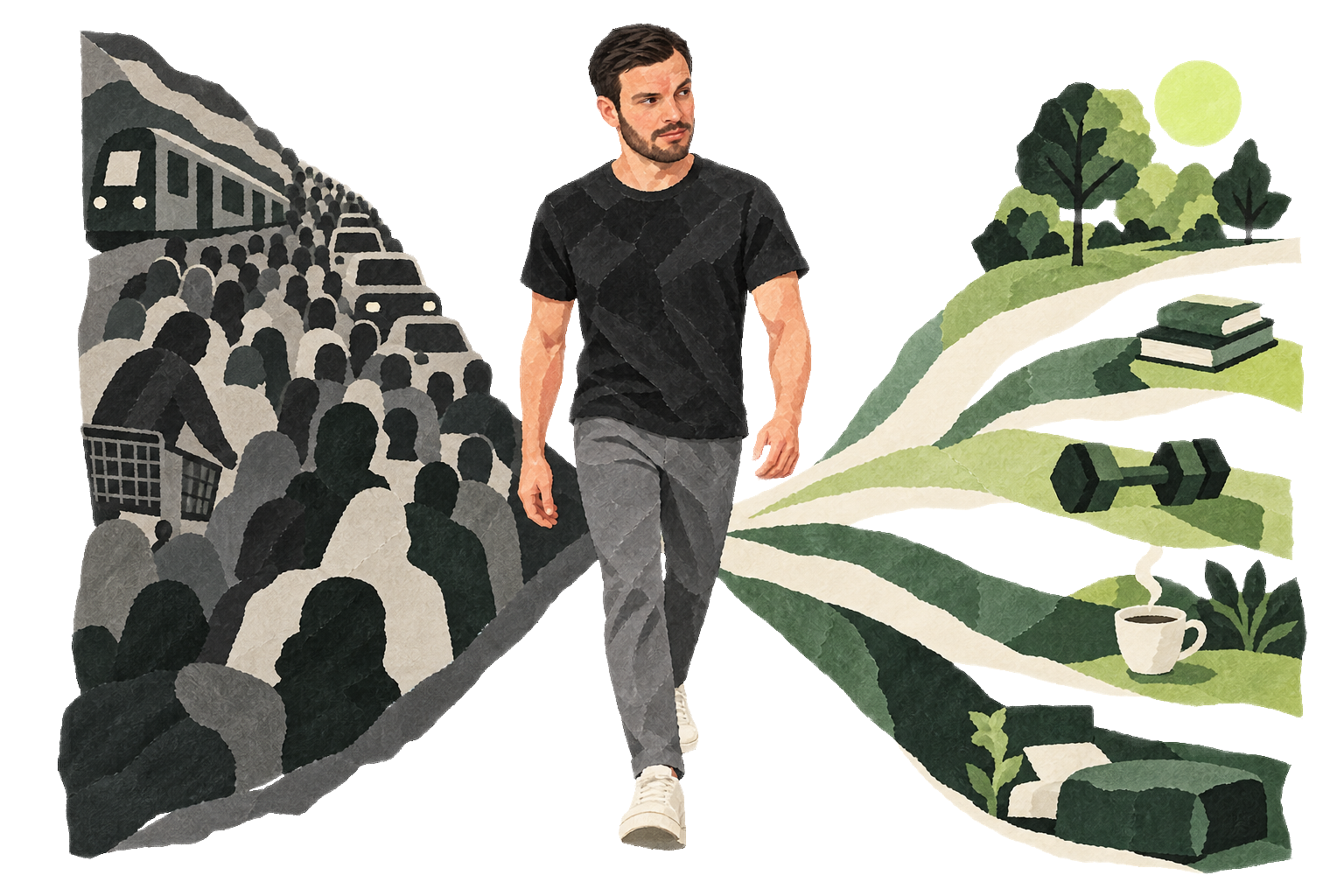
The five-day, eight-hour workweek and two-day weekend took shape during the Industrial Revolution, when production in large factories transformed working life. Two hundred years later, this arrangement still shapes our lives, even though the world has changed.
Imagine if the entire country didn’t go out for lunch and shopping on weekends. Imagine supermarkets without the after-work rush. Or public transport without crowds of people commuting at the same time. No peak seasons on holiday destinations and airports.
Spreading these activities across the week, month, and year would make better use of public spaces, which has become especially important during a pandemic, and it can also be very beneficial for your own life.
https://twitter.com/naval/status/1029312163729432576
Life gets interesting when you step outside the standard schedule.
I don’t divide my days into free time and unfree time. I work every day, but not all day. Just when I feel like it. If you like what you're doing, you feel like working often. I don’t have weekends or holidays in the usual sense. I do enjoyable things when I want and bring my laptop along.
I love the variety and the lack of a rigid schedule. I go to coffee bars, get sun in the park, read books, workout and meet friends or dates whenever I want. And meanwhile I have enough time to cook real food and sleep enough, the two most important things for health.
The conventional work calendar can make it harder to live well and push us toward shortcuts and cheap dopamine. But shortcuts never work in the long run. As a result, depression and obesity are rampant.
Being caught in this system can compromise, for example:
- Nutrition. Crap foods are everywhere, including company lunches, restaurant foods and hotel breakfasts. You can't be too obsessed to cook your own foods, but it takes time we don't have anymore.
- Relaxation. Between everything you have to do in a day, it seems like there's little to no opportunity to just have a life. To just do nothing that requires your attention for a while (yes, watching TV also requires your attention).
- Sleep. We have become too busy to get enough sleep, meaning 8 to 9 hours every day. The alarm goes early to commute to work, and in the evening we go to sleep late. Each weekend, our sleep rhythm gets destroyed again.
- Workouts. Working out requires time and focus, and oftentimes workouts get skipped because we are too busy.
- Family. We rely on daycare because work leaves us too little time with our children.
- Posture. Working with a computer requires a good posture to not run into physical problems later. But it's hard to maintain good posture all day and variety is key.
Working a day job you don't like, in order to buy things you don't need to impress people you don't like. Looking forward to the next weekend or holidays all week in order to "relax" by eating fast food, binge drinking and fucking up sleep rhythm.
I don’t think this is the best way to distribute the demands on our time.