
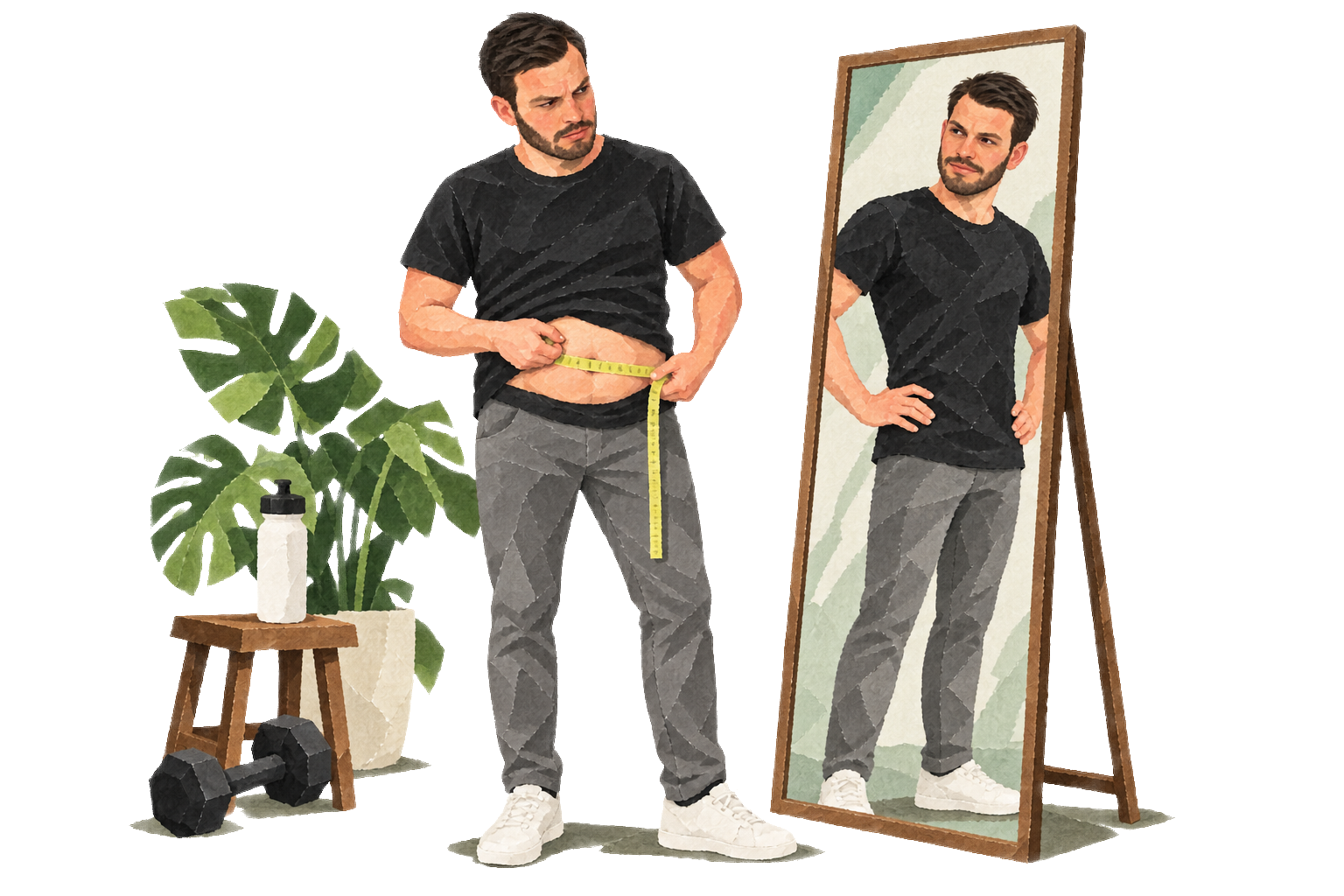
“Calories in, calories out” is a useful starting point for understanding weight change. But what influences those two sides of the equation?
I recently read The Hormone Factor, which made me think more about the role of hormones. It states that excess weight is caused by at least nine different imbalanced hormones.
I think the book sometimes treats cause and effect too simply. Obesity can affect hormones, even as hormones may influence behavior and body composition.
A sustained calorie deficit is necessary for weight loss, but that does not tell the whole story of how people reach one.
Hormones are still worth understanding: they affect stress, sleep, muscle growth, libido and energy, among other things.
Excess body fat can affect hormone levels and make it harder to change habits. And as we have seen before, almost 90% of adults has excess body fat.
Gynecomastia, dad bods and abdominal fat are common. I see them as reasons to pay attention to body composition and, where relevant, hormonal health.
https://twitter.com/gijsheerkens/status/1538827173624258564
The most important hormones are:
- Insulin (generated by the pancreas)
- Regulates blood sugar levels
- Regulates fat deposition
- Regulates muscle growth
- Thyroid hormone (thyroid)
- Stimulates fat oxidation
- Releases energy
- Improves blood flow
- Accelerates metabolism
- Supports waste disposal
- Lowers cholesterol
- Relaxes muscles and joints
- Generates body heat
- Stimulates immune system
- Testosterone (testicles, ovaries, adrenal glands)
- Stimulates muscle growth
- Stimulates fat breakdown
- Empowers in stressful situations
- Increases libido
- Improves energy levels and mood
- Estrogen (ovaries, adrenal glands, adipose tissue)
- Helps protect against osteoporosis
- Prevents wrinkles
- Regulates menstruation
- Stimulates energy levels and improves mood
- Increases sexual desires in women
- Causes breast growth (in men, too)
- Stimulates fat storage
- Progesterone (ovaries, adrenal glands, testicles)
- Prevents moisture retention
- Regulates menstruation and pregnancy
- Relaxes the mind
- Improves sleep
- Growth hormone (pituitary)
- Strengthens muscles
- Regulates fat oxidation
- Regulates growth in young people
- Regulates energy levels and recovery
- DHEA (adrenal glands)
- Stimulates muscle growth
- Supports fat oxidation
- Supports immune system
- Cortisol (adrenal glands)
- Supplies fast energy in stressful situations
- Raises blood sugar levels
- Inhibits inflammation
- Stimulates activity and decisiveness
- Decreases allergies and fever
- Melatonin (pineal gland)
- Supports sleep
- Works like an antioxidant
- Supports immune system
Our bodies are complex systems, and no single measure tells the whole story.
That is why I return to the basics: sleep, nutrition and movement.
Here are the habits I want to focus on for my health:
- Eat whole foods like nature intended.
- Focus on nutrient density by eating mainly animal foods.
- Eat low carb and no sugar.
- Eat plenty of animal fats and healthy oils.
- Prioritise protein.
- Take it easy on the gluten and dairy.
- No alcohol, or in moderation.
- Drink plenty of water.
- Find the foods that provoke inflammation in your body.
- Resistance training is mandatory, not optional.
- Move around 30 to 60 minutes a day, or more.
- Get a consistent sleeping schedule.