
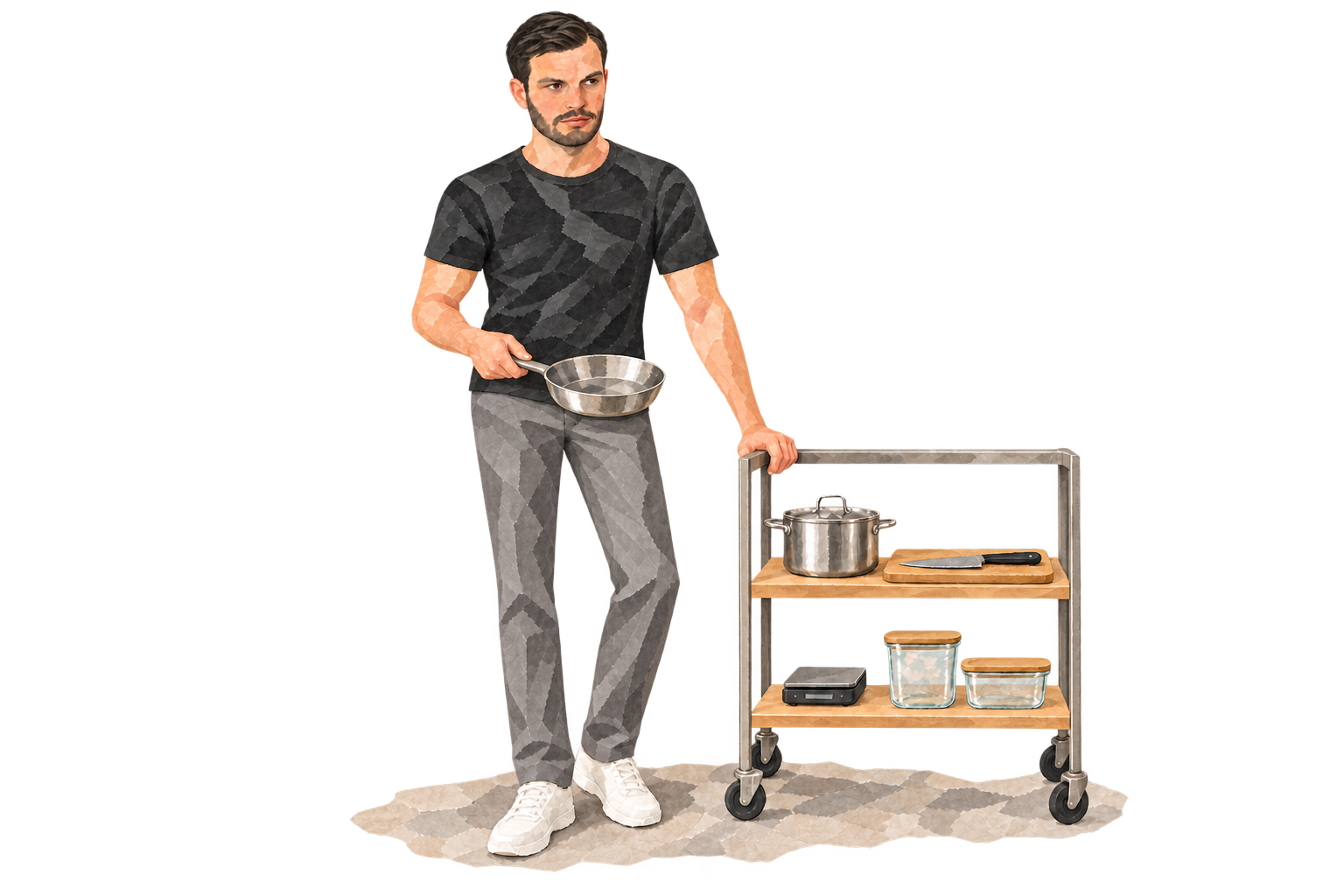
In a world full of temptations, substances I try to avoid and conflicting nutrition advice, cooking for myself helps me stay on track. A few pieces of kitchen equipment are enough to prepare whole-food meals.
Nutrition is the most important factor for health, closely followed by sleep, stress level, sun exposure and weight training. Here are ten cooking essentials I rely on.
My starting point is to limit plastic in the kitchen. Plastic is the last material to pack and store foods in because it leaks carcinogenic chemicals and toxic xenoestrogens into it. Many foods are sold in plastic packaging, which is hard to avoid entirely.
You can buy the items on this list for about $200, so you do not need a large budget. Prices are based on the Amazon listings I'm linking to, but IKEA also has all of it. You can also look for second-hand items or shop at a local market.
If you live a nomadic lifestyle or tend to go on long holidays, I'd look for Airbnbs over hotels so you can cook your own meals. I prefer cooking for myself because restaurant meals often contain ingredients I try to limit, including vegetable oils, sugar and refined grains.
Many Airbnbs have at least some of this equipment. I check the listing photos before booking. When you stay more than two weeks I'd consider it a good investment to buy the missing equipment. I hope you have low time preference on health.
I eat a lot of meat, fish and eggs, and I want tools that let me prepare them well.
My ten minimalist kitchen essentials are:
- Stainless steel skillet ~$40
- Stainless steel pot with lid ~$35
- Blender ~$20
- Kitchen scale ~$10
- Chef's knife ~$40
- Non-plastic water bottle ~$10
- Non-plastic spatula ~$5
- Non-plastic cutting board ~$10
- Non-plastic storage containers ~$25
- Plant spray bottle ~$5
Stainless steel skillet ~$40
I put the skillet first because I use it more than any other piece of cookware.
In addition, this is also the most expensive item to purchase, but you will notice that when you invest in a good one it will last for years.
Make sure to use a skillet that is made out of stainless steel or cast iron. Non-stick layers are toxic and carcinogenic and will start to wear down in no time. Stainless steel skillets are awesome and are definitely an upgrade from non-stick if you learn how to use it.
At first, food may stick and you may ruin a few meals. Once you learn how to control the heat, the pan becomes much easier to use.
The trick is to preheat it and use a cooking fat with a high smoke point. But I suppose you weren't using vegetable oils anymore anyway, were you?
A diameter of 20 centimeters, or about 8 inches, works for me. I have used this size for years.
Stainless steel pot with lid ~$35
I'm using a stainless steel pot to make bone broth, to boil water for herbal tea and to cook small amounts of vegetables. A cast iron one is also fine.
Make sure the pot has the same size as the skillet and comes with a lid, so you can use the lid on the skillet too.
Measurement marks inside the pot are useful too.
Blender ~$20
A blender or hand blender works for blending vegetables into soup or preparing VanMan's raw egg smoothie.
Non-plastic blenders are better because plastic is a toxin that you don't want in your food. So go for a blender with a glass container or a stainless steel hand blender. I prefer the latter, which can also be cheaper.
Kitchen scale ~$10
A kitchen scale is essential if you want to keep track of your calories and macros. If you don't weigh your food, it's hard to have a good idea about your intake.
Chef's knife ~$30
You only need one good knife that you can use for everything. A pocket knife or a chef's blade serve this purpose just fine.
Knives can be found in many price ranges, but for $30 you should be able to find a usable one. A blade about 10 centimeters (3.5 inches) long is enough for my needs.
Watch the video below if you're into knife porn and have some money to spend.
Non-plastic water bottle ~$5
I drink water from a glass water bottle. Metal is also fine, plastic isn't.
Preferably buy spring water in glass bottles, carbonated or still. Tap water is more and more polluted all over the world, even though governments tell you it's not.
Non-plastic spatula ~$5
A simple spatula is useful for eggs and fish. I choose wood or metal over plastic.
Non-plastic cutting board ~$10
For cutting meat and fish, I use a board made of wood or stainless steel.
Non-plastic storage containers ~$25
Store food preferably in glass, wood or metal, non-plastic containers. Plastics will leak chemicals into the foods it touches, especially when heated.
Plant spray bottle ~$5
This one is not to cook, but to keep your kitchen clean. Mainstream cleaning products are very toxic to inhale and fuck up your hormones.
It's very easy to make your own cleaner though, mixing water and vinegar 1:1. Add lemon if you don't like the smell. Put it in a plant spray bottle and you're done.
Worthy additions
Mesh strainer ~$5
Use a mesh strainer to drain rice, wash foods and make ghee. A small tea strainer can serve this purpose, too.
Stainless steel mixing bowl ~$5
A non-reactive stainless steel mixing bowl to mix different foods. The bigger the better.
Cheese grater ~$5
A cheese grater comes in handy to grate cheese and fermented vegetables like garlic and onion.
Coffee percolator ~$20
This is a luxury rather than a necessity, but a coffee percolator is small and you can make the best coffee with it.